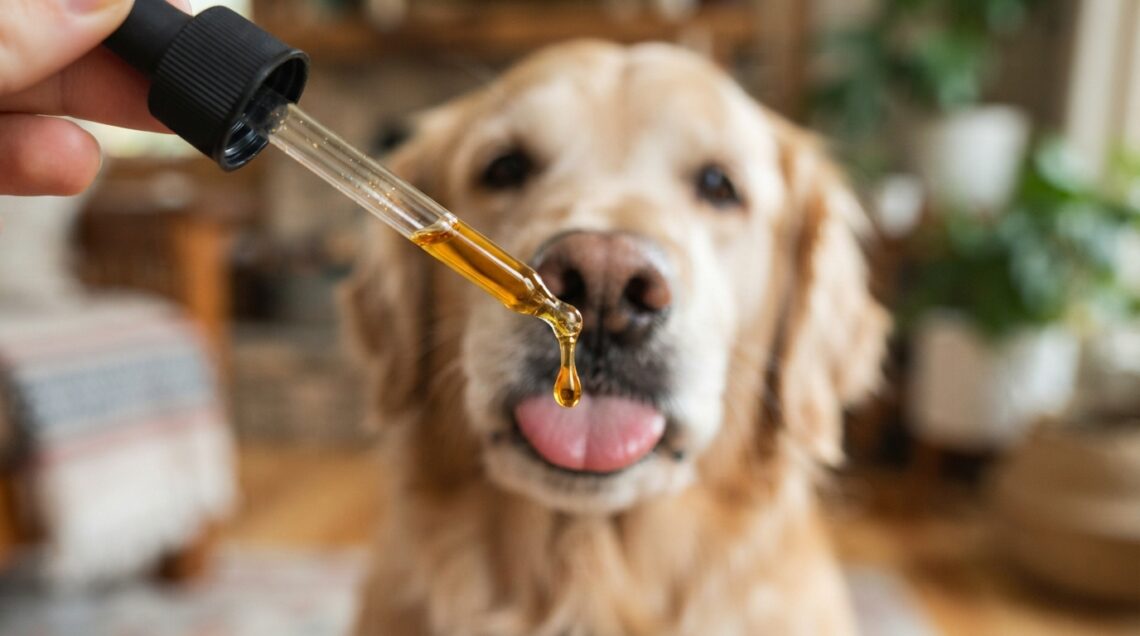
Pet owners often encounter CBD products while searching for ways to support a dog’s comfort and general wellness. The growing selection can make the subject difficult to navigate, especially when product labels use different concentrations and health claims.
Before considering Holistapet CBD Oil for Dogs, it helps to understand what CBD is, what research has actually examined, how products differ, and which situations require veterinary advice. CBD research in dogs is still developing, so practical decisions should be based on evidence rather than broad promises or assumptions.
What CBD Is and Where It Comes From
CBD, short for cannabidiol, is a cannabinoid found naturally in cannabis plants, including hemp varieties. It is different from tetrahydrocannabinol, or THC, the cannabinoid associated with the intoxicating effects of cannabis.
CBD interacts with biological systems in animals, including pathways associated with the endocannabinoid system. Researchers have investigated whether these interactions could influence areas such as pain perception, inflammation, neurological activity, and other physiological processes.
The presence of a biological effect does not automatically mean that CBD is an established treatment for a particular canine condition. Evidence needs to be evaluated according to the condition studied, the formulation used, the amount administered, and the length of the research.
Why product descriptions can be confusing
Hemp, hemp extract, hemp seed oil, CBD, full-spectrum, and broad-spectrum are not interchangeable terms.
Hemp seed oil is made from hemp seeds and contains fatty acids, but it should not be assumed to contain meaningful amounts of CBD. Hemp extracts can contain CBD and other cannabinoids, depending on how they are produced.
A product label should therefore provide specific cannabinoid information instead of relying entirely on general references to hemp.
What Current Canine Research Shows
Research into CBD for dogs has expanded, but the available evidence remains relatively small compared with research on established veterinary medicines.
A 2023 review examined published cannabinoid studies involving companion animals and found evidence relating to several areas, including osteoarthritis and seizure disorders. The review also identified limitations involving sample sizes, study methods, formulations, and the need for additional research.
Research findings can still provide useful information when interpreted carefully.
Studies involving osteoarthritis
One frequently cited canine study involved dogs diagnosed with osteoarthritis. The randomized, double-blinded study evaluated CBD oil over a four-week period and reported improvements in pain and activity measures during treatment.
The study also reported an increase in alkaline phosphatase among dogs receiving CBD. The finding does not mean that CBD is necessarily harmful to every dog, but it demonstrates why safety monitoring matters when evaluating repeated administration.
Research involving epilepsy
CBD has also been examined as an additional treatment for dogs with difficult-to-control epilepsy.
A 2019 randomized, blinded clinical trial evaluated cannabidiol alongside conventional antiepileptic treatment. The researchers reported a reduction in seizure frequency in the CBD-treated group compared with placebo, although the study involved a limited number of dogs.
This distinction matters. The study examined CBD as an adjunct rather than a replacement for prescribed epilepsy treatment.
Understanding Product Strength
CBD products can have very different concentrations even when their bottles look similar.
A 30 mL bottle containing 300 mg of CBD has approximately 10 mg per mL. A 30 mL bottle containing 900 mg has approximately 30 mg per mL.
The calculation is:
Total CBD Ă· total liquid volume = CBD per mL
Knowing this concentration makes it easier to understand what a measured amount of oil contains.
Why concentration matters
Consider three products:
- 300 mg CBD in 30 mL = 10 mg/mL
- 600 mg CBD in 30 mL = 20 mg/mL
- 900 mg CBD in 30 mL = 30 mg/mL
The bottles contain the same volume, but their CBD concentrations are different.
This is why bottle size alone should never be used to compare product strength.
Concentration also should not be confused with an appropriate dose. The correct amount for an individual dog cannot be determined from bottle strength alone.
Reading the Label Carefully
A clear label provides information that allows the product to be identified and measured.
Details to look for
- Total CBD in milligrams
- Total liquid volume
- CBD per serving
- Complete ingredient list
- Intended animal species
- Manufacturer information
- Lot or batch number
- Storage instructions
- Expiration or best-by date
- Testing information
A label that says only “hemp oil” or “hemp extract” provides limited information about the actual CBD content.
The same principle applies to products that use terms such as “maximum strength” or “extra strength.” Such phrases have little value without a measurable CBD concentration.
Understanding Certificates of Analysis
A certificate of analysis, or COA, is a laboratory document that can provide information about a particular product batch.
Depending on the laboratory, a COA may report cannabinoid concentrations and screening results for substances such as pesticides, heavy metals, microbes, or residual solvents.
The report is more useful when the batch number matches the product being considered.
What a COA can and cannot tell you
A laboratory report can help answer questions about composition and contamination testing. It does not establish that CBD will treat a specific medical condition.
For example, a report may confirm that a bottle contains approximately the amount of CBD stated on its label. That result says something about product composition, but it does not prove effectiveness for arthritis, anxiety, seizures, or another condition.
This distinction is important when evaluating online claims.
Check the Full Ingredient List
A CBD product may contain more than cannabidiol and a carrier oil.
Flavoring agents, herbal extracts, preservatives, and other ingredients can appear in formulations intended for pets or humans.
A dog-specific product should be reviewed ingredient by ingredient.
Ingredients that deserve caution
Particular attention should be given to:
- Sweeteners
- Essential oils
- Concentrated herbal ingredients
- Artificial additives
- Flavoring compounds
- Ingredients associated with canine toxicity
Xylitol is one example of an ingredient that should never be assumed to be safe for dogs. The ASPCA identifies xylitol as toxic to dogs and describes potentially serious effects following ingestion.
If an ingredient is unfamiliar, veterinary advice or a reliable veterinary toxicology source can help determine whether it presents a concern.
Choosing Between Different CBD Formulations
Consumers may encounter isolate, broad-spectrum, and full-spectrum CBD products.
CBD isolate generally contains purified cannabidiol with other cannabinoids removed. Broad-spectrum products usually contain several hemp-derived compounds while THC has been removed or reduced. Full-spectrum products contain multiple naturally occurring hemp compounds and may contain THC.
The terminology describes the composition of the product. It does not establish which formulation is best for every dog.
A product should be judged according to its actual cannabinoid profile, testing information, ingredients, intended use, and the individual dog’s circumstances.
How Administration Can Affect Consistency
CBD oil is commonly measured by volume. Treats and other edible products are generally measured by the amount of CBD contained in each piece.
These formats require different approaches to reading the label.
An oil containing 20 mg/mL allows the amount in a measured volume to be calculated. A treat labeled with 5 mg CBD per piece provides a different measurement system.
Avoid guessing with droppers
Drop size can vary because of differences in the dropper design and liquid properties. Counting drops may therefore be less precise than using a marked measuring device.
When a product provides a calibrated dropper, the markings should be used according to the manufacturer’s instructions.
If a product does not clearly explain how much CBD is contained in the measured serving, determining the actual amount becomes more difficult.
CBD and Prescription Medications
Medication interactions are one of the reasons a veterinarian should be involved when CBD is being considered for a dog with an existing medical condition.
Cannabinoids can influence metabolic pathways involved in the processing of substances. The significance of a potential interaction depends on the medication, dose, formulation, and individual animal.
A veterinarian should be given a complete list of:
- Prescription medications
- Over-the-counter products
- Vitamins
- Herbal supplements
- Other cannabinoid products
This information can help identify potential problems before a new supplement is introduced.
Watch for Changes After Administration
Any new supplement deserves observation during its introduction.
Possible changes can involve appetite, digestion, alertness, coordination, or behavior. Research involving canine CBD has reported adverse effects such as gastrointestinal changes at higher exposures.
A 2021 study of repeated CBD administration in healthy dogs reported that treatment was generally tolerated over 28 days, while higher doses were associated with more gastrointestinal adverse events and increased alkaline phosphatase activity.
Keep a simple record
A basic record can make changes easier to recognize.
Track:
- Date and time of administration
- Product concentration
- Amount given
- Appetite
- Energy
- Stool quality
- Activity level
- Other medications
- Unusual behavior
This information can also be useful during a veterinary consultation.
Know When CBD Should Not Be the First Step
A supplement should not delay veterinary assessment when a dog has a significant or unexplained health change.
For example, persistent vomiting, repeated seizures, severe weakness, collapse, breathing difficulty, or sudden loss of coordination requires appropriate medical attention.
A dog experiencing chronic discomfort may also need diagnostic testing to identify the underlying cause. Managing symptoms without understanding the cause can allow an underlying condition to remain untreated.
Understanding the FDA Position
The U.S. Food and Drug Administration has stated that it has not approved cannabis for use in animals and has not established that cannabis-derived products marketed for pets are safe or effective for their claimed uses.
The agency has also raised concerns about products marketed with unapproved disease-treatment claims.
This does not mean that every research finding about CBD is invalid. It means that scientific evidence and regulatory approval are separate issues, and consumers should not interpret commercial claims as proof of veterinary efficacy.
A Practical Product Comparison Method
When several products appear similar, evaluating them using consistent criteria can reduce confusion.
Compare these factors
- Total CBD concentration
- CBD per milliliter or serving
- Complete ingredient list
- THC information
- Batch-specific testing
- Manufacturer identification
- Intended animal use
- Storage requirements
- Expiration information
- Specificity of health claims
A product that provides clear information is easier to evaluate than one relying on vague descriptions.
Price can also be compared, but cost alone does not establish quality. A lower-priced bottle may contain substantially less CBD, while a more expensive product may not provide stronger evidence of effectiveness.
Frequently Asked Questions
Is CBD the same as hemp oil?
No. Hemp oil can refer to different products, including hemp seed oil, which is not equivalent to a concentrated CBD extract.
Does a higher CBD concentration mean better quality?
No. Concentration describes strength, while quality involves factors such as purity, accurate labeling, testing, ingredients, and manufacturing practices.
Can a dog use a human CBD product?
Human products should not automatically be considered appropriate for dogs. Additional ingredients may be unsuitable for animals, and product concentrations may not be designed for veterinary use.
Is CBD proven to treat every canine condition?
No. Research has examined specific conditions, but evidence remains limited for many proposed uses.
Should a veterinarian be consulted?
Veterinary guidance is particularly important when a dog has a medical condition, takes prescription medication, or develops new symptoms.
Final Thoughts
Understanding the product label, cannabinoid concentration, ingredients, testing, research evidence, and potential interactions can help pet owners evaluate CBD more carefully. For dogs with health conditions or ongoing medication needs, veterinary guidance should remain part of the decision-making process.